FREE | Every Friday: May 29 - August 28 | 5 PM - 6 PM

Join us throughout the residency season for our free public series of short and informal artist talks, readings, and presentations. We’ll learn about works-in-progress from our artists and scholars-in-residence with informative and inspiring presentations in all disciplines. This is a wonderful way to kick off your weekend! Bring a friend, all are welcome.
Location: Main Campus. Look for Craigardan Event sign at the end of Main Campus driveway (two “doors” west of the farm store, towards Keene). Google Maps Link
Sue Ellen Herne
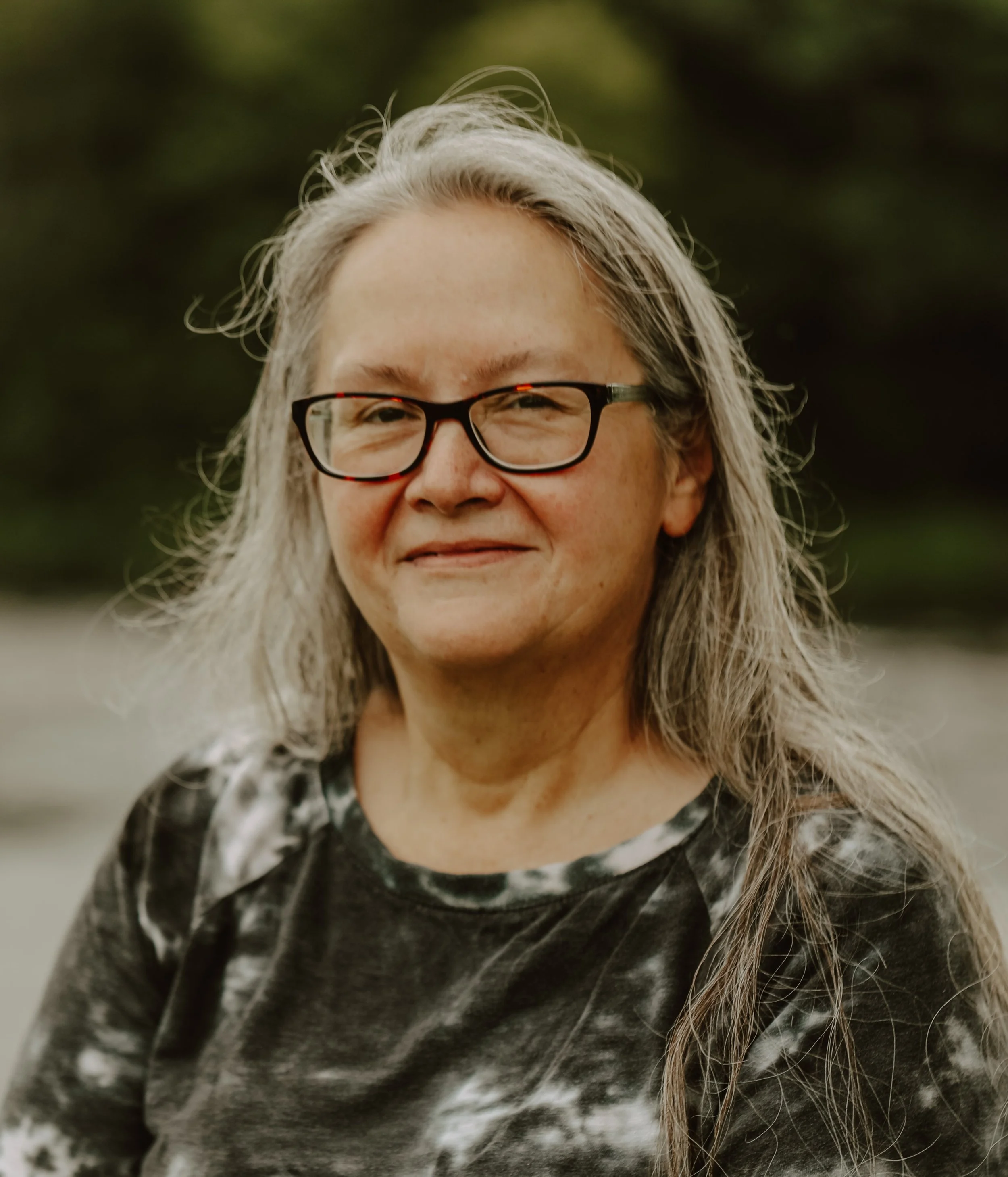
Kononwa'tshén:ri ión:kia'ts Onkwehonwehnéha. (Kononwa'tshén:ri is my indigenous name.) Sue Ellen Herne ión:kia'ts Kiohrhénsha. (Sue Ellen Herne is my English name.) Wakhskaré:wake, Ahkwesáhsne nitewaké:non. (I'm Bear Clan from Akwesasne.)
I have over forty years of experience in creating thought-provoking paintings and installations with a focus on Haudenosaunee (specifically Mohawk) culture and language. Images of my work may be found in: Three Centuries of Woodlands Indian Art - a collection of Essays edited by J.C.H. King and Christian F. Feest, 2007 Iroquois Art, Power and History by Neal Keating, 2012
I’m an artist who spent 23 years working at the Akwesasne Museum as the program coordinator. I have been a life-long learner of culture and language, and I have shared what I have learned in classrooms, through my art, and in my work as museum program coordinator. In 2018, I left my job to study in two full-time Kanién’keha (Mohawk) language programs. I’m continuing to study, most recently in an Advanced Fluency Program in order to surpass my current intermediate level of fluency.
I participated in a one-week artist's residency at Craigardan in 2024, following my graduation from the Ratiwennahní:rats language program in Kahnawake. I wanted to explore how to best manage my time in order to do all of the things I want to do: create art for myself and others, support language and cultural revitalization, and make traditional items for my family, with the overall goal of incorporating all of this into my life in a meaningful way.
The residency helped to clarify things for me, and now that two years have passed, I would love to be able to experience a week at Craigardan with other Mohawk people who have like-minded pursuits.
Kaiahtenhtas Thompson
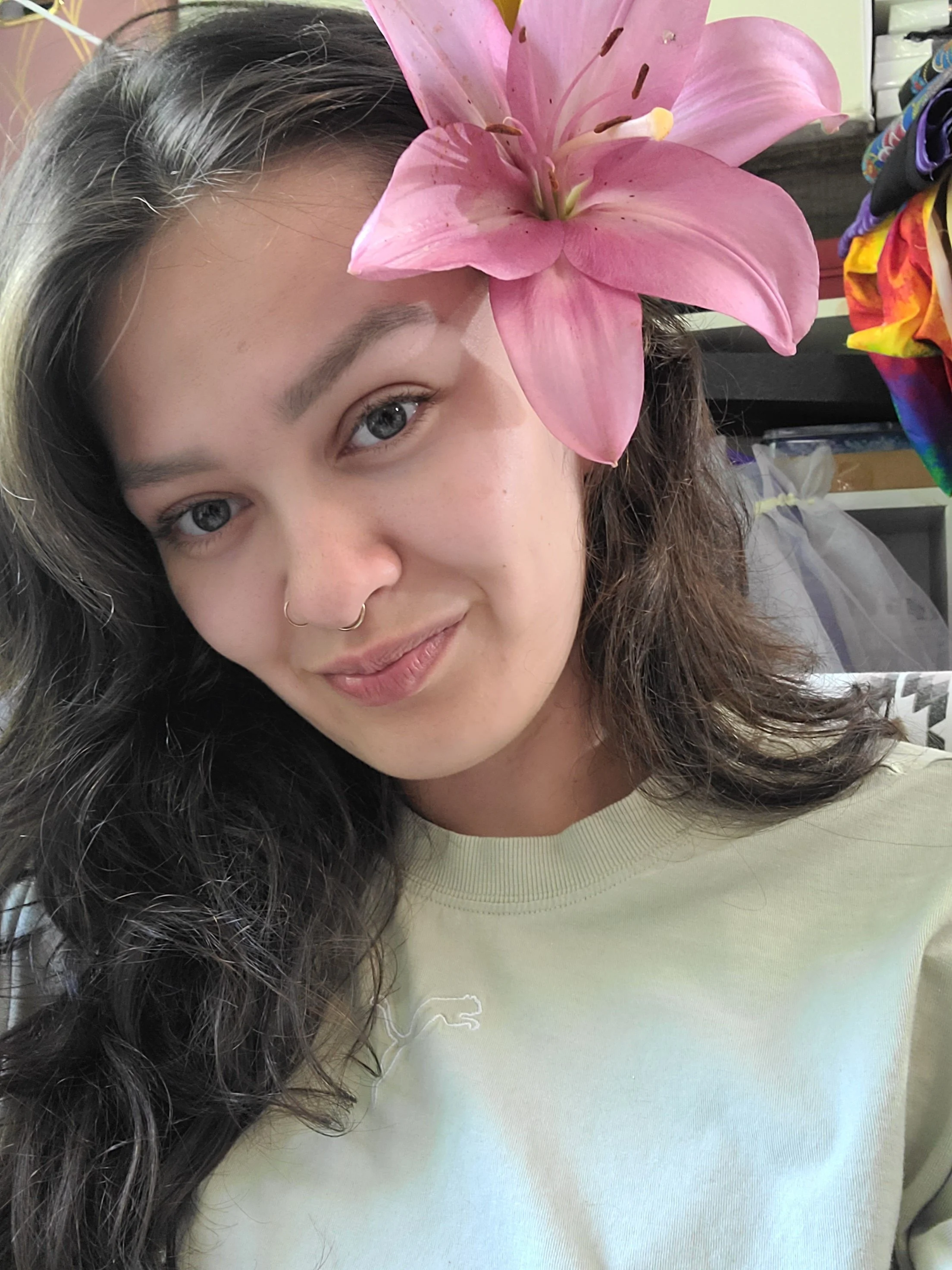
Kaiahtenhtas Thompson (she/her) is an Akwesasne, Wolf Clan-based beadwork artist whose intricate pieces tell stories rooted in Kanien'kehá:ka culture and the natural world. Born in Cornwall, Ontario, Thompson creates complex, image-rich works using beads, porcupine quills, white birch bark, black ash splint, cedar, sweetgrass, crystals, shells, and wool. Her signature "basket weave" technique—developed self-taught while working beside master basket maker Carrie Hill and drawing on childhood memories of her grandmother weaving—transforms beads into three-dimensional surfaces that echo woven splint, bridging beadwork and basketry traditions.
Thompson began beading at age six, taught by her mother, artist Marlana Thompson. At twenty-one, she expanded into quillwork through study with Akwesasne artists Keira Pyke and Justin Lazore. She graduated from the University of British Columbia with a Bachelor of Education in 2023.
Her beadwork has been recognized with ribbons at the Mohawk and Abenaki Art Market and Competition (2022, 2023), the Akwesasne Art Market and Juried Show (2023, 2024, 2025), the honor of beading the 2024 New York State Fair Indian Village Princess sash, and recieving a ribbon in 2025.
Crystal T. Henry
Crystal T. Henry is a contemporary Haudenosaunee/Anishinaabe artist based in Akwesasne on the St. Regis Mohawk Reservation. Her artistic practice is grounded in Indigenous ways of knowing, where observation, repetition, and relationship to the natural world function as forms of knowledge carried across generations. She works primarily in two distinct forms—illustration and beadwork—each guided by its own process, purpose, and way of holding meaning.
Animals serve as both subject and structure in Henry’s work. Their forms become vessels for layered line, rhythm, and symbolism. Her visual language draws upon Eastern Woodland floral motifs alongside design influences from Southwest pottery and Northwest Coast art. Working by hand with a mechanical pencil and Sakura Micron pens, she creates detailed illustrations that are later digitally refined and combined with photographs of her beadwork using Adobe Photoshop. This blending of hand-drawn imagery and digital process reflects a dialogue between tradition and contemporary practice.
Her beadwork employs traditional techniques using size 11, 13, and 15 seed and Delica beads, most often in the creation of earrings that translate cultural design into wearable form. Across both illustration and beadwork, Henry’s work reflects the ways Indigenous knowledge is carried—through pattern, repetition, land-based imagery, and creative practice as an act of remembering.
In addition to her visual art, Henry has dedicated more than a decade to Kanien’kehá:ka language learning and revitalization. She has participated in the Á:se Tsi Tewá:ton Adult Immersion Program, online Mohawk language courses, the SRMT Mohawk Language Teaching Certificate Program (interrupted by COVID-19), and community programs through AEDA and SRMT. She currently serves as a Digital Resource Developer with the Akwesasne Mohawk Board of Education’s Mohawk Language and Culture Department. Her ongoing language study informs her artistic practice, reinforcing the inseparable relationship between language, culture, and visual expression.
Henry holds an Associate of Fine Arts degree in 2-D Arts from the Institute of American Indian Arts, a Bachelor of Fine Arts in Graphic Design, and a Master of Arts in Teaching in Art Education from SUNY Oswego. She also pursued graduate studies in Native American Studies with an emphasis in Contemporary Native American Art at the University of California, Davis. Her artistic training includes photography, pottery, printmaking, weaving, silversmithing, and graphic design.
She has held museum and curatorial roles, including internships at the National Museum of the American Indian, and has worked with the R.C. Gorman Museum and the Native North American Travelling College. Alongside her husband, artist Richard “Terry” Chrisjohn, she co-founded Chrisjohn Arts LLC, producing prints, jewelry, sculpture, and other works that bridge traditional knowledge with contemporary forms.
Her forthcoming body of work is an astrological series exploring relationships to the cosmos through a Haudenosaunee lens, drawing from creation stories in which the stars are understood as relatives and points of origin. The series will unite animal imagery, pattern, and cosmological symbolism to examine connections between land, sky, ancestry, and language.
As a mother of four, Henry continues to pass on creative and cultural knowledge to the next generation while sustaining her professional practice. Her work honors care, time, and continuity—reflecting Indigenous knowledge systems carried forward through both art and language.
Kaia’tihtakhe
Kaia’tihtakhe (also referred to as Jackie Hall) is a Kanien’kehá:ka woman, and mother of seven children, whose focus is to make sure that our future generations can sustain themselves on ancestral territory. Jackie is an independent journalist and writer and her work has been published on sodalitenews.com, sharing-our-stories.com, and in Craigardan’s Gardan Journal. As an activist and educator, Jackie created a land-based language camp to steward and cultivate the land while reclaiming the Mohawk language and traditional practices. She leads by example in fighting the ongoing systemic oppression and environmental genocide which generations of Akwesasronon continue to face on tribal land.